Category: Uncategorized

  • Presence and My Twists and Turns

    Presence and My Twists and Turns

    [fusion_builder_container type=”flex” hundred_percent=”no” equal_height_columns=”no” menu_anchor=”” hide_on_mobile=”small-visibility,medium-visibility,large-visibility” class=”” id=”” background_color=”” background_image=”” background_position=”center center” background_repeat=”no-repeat” fade=”no” background_parallax=”none” parallax_speed=”0.3″ video_mp4=”” video_webm=”” video_ogv=”” video_url=”” video_aspect_ratio=”16:9″ video_loop=”yes” video_mute=”yes” overlay_color=”” video_preview_image=”” border_color=”” border_style=”solid” padding_top=”” padding_bottom=”” padding_left=”” padding_right=””][fusion_builder_row][fusion_builder_column type=”1_1″ layout=”1_1″ background_position=”left top” background_color=”” border_color=”” border_style=”solid” border_position=”all” spacing=”yes” background_image=”” background_repeat=”no-repeat” padding_top=”” padding_right=”” padding_bottom=”” padding_left=”” margin_top=”0px” margin_bottom=”0px” class=”” id=”” animation_type=”” animation_speed=”0.3″ animation_direction=”left” hide_on_mobile=”small-visibility,medium-visibility,large-visibility” center_content=”no” last=”true” min_height=”” hover_type=”none” link=”” border_sizes_top=”” border_sizes_bottom=”” border_sizes_left=”” border_sizes_right=”” first=”true”][fusion_text]

    As I began to write this blog, I was going to say that presence had many twists and turns.  What is more true is that my journey with presence and was the thing that was circuitous.

    Often, I would rely on my head to explain presence to me.

    I was used to depending on my head for just about everything I did in my life up until then.  I would analyze and turn things over in my head endlessly, never really trusting the answer that I received.

    When Samyama seemed elusive, I would spend time trying to explain it so that my head could understand the mechanics of it. Thinking that if I could only get my head on board, Samyama would flow effortlessly.  Each time I did this, it wasn’t until I returned to my heart that I would once again remember that it was my heart, not my head that understood the present moment. And that understanding came without needing to know why or how it worked.

    Whenever I asked for guidance in my personal life, the answer I always received was “Be present.”

    It took a long time before I could fully trust that guidance. At some level it was something I already knew, and on another level I was filled with terror to trust the present moment.  I thought I would freeze and not know what to do, or how to respond.

    I was already trusting presence in my work as a Samyama facilitator.  When I work with a client, I implicitely trust the guidance that comes through my heart in each moment.  That skill was honed during my apprenticeship.

    Part of my journey has been learning the role that my childhood wounds had in the terror response I felt when I was called to be present. I had to unravel those old stories, the ones that had me freezing up in school when I didn’t know an answer to a question, or when someone asked me a question and I couldn’t easily find an answer. Or when I knew I would stutter when I spoke.

    I attribute my daily Samyama practice with helping me to do just that. I learned that I could always trust my heart to give me an answer.  Always, it never failed me.

    Recently I’ve been called to be even more present, to rely on this present moment for all of my needs. I was scheduled to do a 5-minute speech for a mastermind that I am a part of.  Each time I started to plan the talk, I would not receive any insight, and the “Be present” message would arise. I finally decided to listen to that message, and the speech went great. I had the work=ds I needed when I needed them. I was cohesive and clear. And I got great feedback.

    My soul was smiling the whole while I was peaking, and as I received my feedback.

    This is one of the many examples of how presence serves me when I trust it completely.
     

  • More … Tales from the Ammo Box

    More … Tales from the Ammo Box

    [fusion_builder_container type=”flex” hundred_percent=”no” equal_height_columns=”no” menu_anchor=”” hide_on_mobile=”small-visibility,medium-visibility,large-visibility” class=”” id=”” background_color=”” background_image=”” background_position=”center center” background_repeat=”no-repeat” fade=”no” background_parallax=”none” parallax_speed=”0.3″ video_mp4=”” video_webm=”” video_ogv=”” video_url=”” video_aspect_ratio=”16:9″ video_loop=”yes” video_mute=”yes” overlay_color=”” video_preview_image=”” border_color=”” border_style=”solid” padding_top=”” padding_bottom=”” padding_left=”” padding_right=””][fusion_builder_row][fusion_builder_column type=”1_1″ layout=”1_1″ background_position=”left top” background_color=”” border_color=”” border_style=”solid” border_position=”all” spacing=”yes” background_image=”” background_repeat=”no-repeat” padding_top=”” padding_right=”” padding_bottom=”” padding_left=”” margin_top=”0px” margin_bottom=”0px” class=”” id=”” animation_type=”” animation_speed=”0.3″ animation_direction=”left” hide_on_mobile=”small-visibility,medium-visibility,large-visibility” center_content=”no” last=”true” min_height=”” hover_type=”none” link=”” border_sizes_top=”” border_sizes_bottom=”” border_sizes_left=”” border_sizes_right=”” first=”true”][fusion_text]

    We just finished our 2nd intro seminar that is entitled, “Changing the conversation around grief”

    One of the topics that surfaced was having more than one type of conversation. I would like to reference the preemptory and the post-traumatic type conversation today. Our idea of changing the conversation starts with overcoming the stigma and reluctance to start the conversation that needs to be talked through. In the case of aging parents, my example of how our son started the conversation was, “Hey, mom and dad have you made out a will?”

    How simple and direct was that question? We looked at one another and admitted that it was time to have these conversations. How much easier would life be if our hesitation to ask a difficult question vanished? The awkwardness you feel betrays the value of answer. So often the question is responded to with,

    “What? I don’t want to talk about that.”

    The symptom of awkwardness in confronting something that you would rather not face. Yet, with the occurrence of an unanticipated death, had the question been asked, then the feelings of grief mixed with guilt could have been avoided. Guilt in knowing that there was something left unsaid.

    However, if you have a plan for your estate, then the conversation is much easier to have. In contrast, a parent may have an estate plan and their survivor may regret that they responded the same way with,

    “Let’s not talk about that now.”

    Conversations becomes a critical part of the grief process or any process really. As we discussed, in the introduction of Seminar 2, “You are not ready until you are ready.” Being ready is acknowledging that you can step into the grief. I have found that the Marine adage of “Over, Around or Through” that only by going through grief can you heal. Going over or around only avoids the issue and doesn’t begin healing.

    Communication is critical in both instances. Having the conversation ahead of time is a preference. In the unfortunate case were the question wasn’t asked, it must then occur post-event. In this case, relying on a post-traumatic event conversation you can begin the process to heal from the loss. Now this event can be anything, I used an example of an estate plan or will however, the example could have been a divorce, the loss of health, death of a grandparent or child. The Grief Recover Institute has identified over 40 different types of events that cause grief.

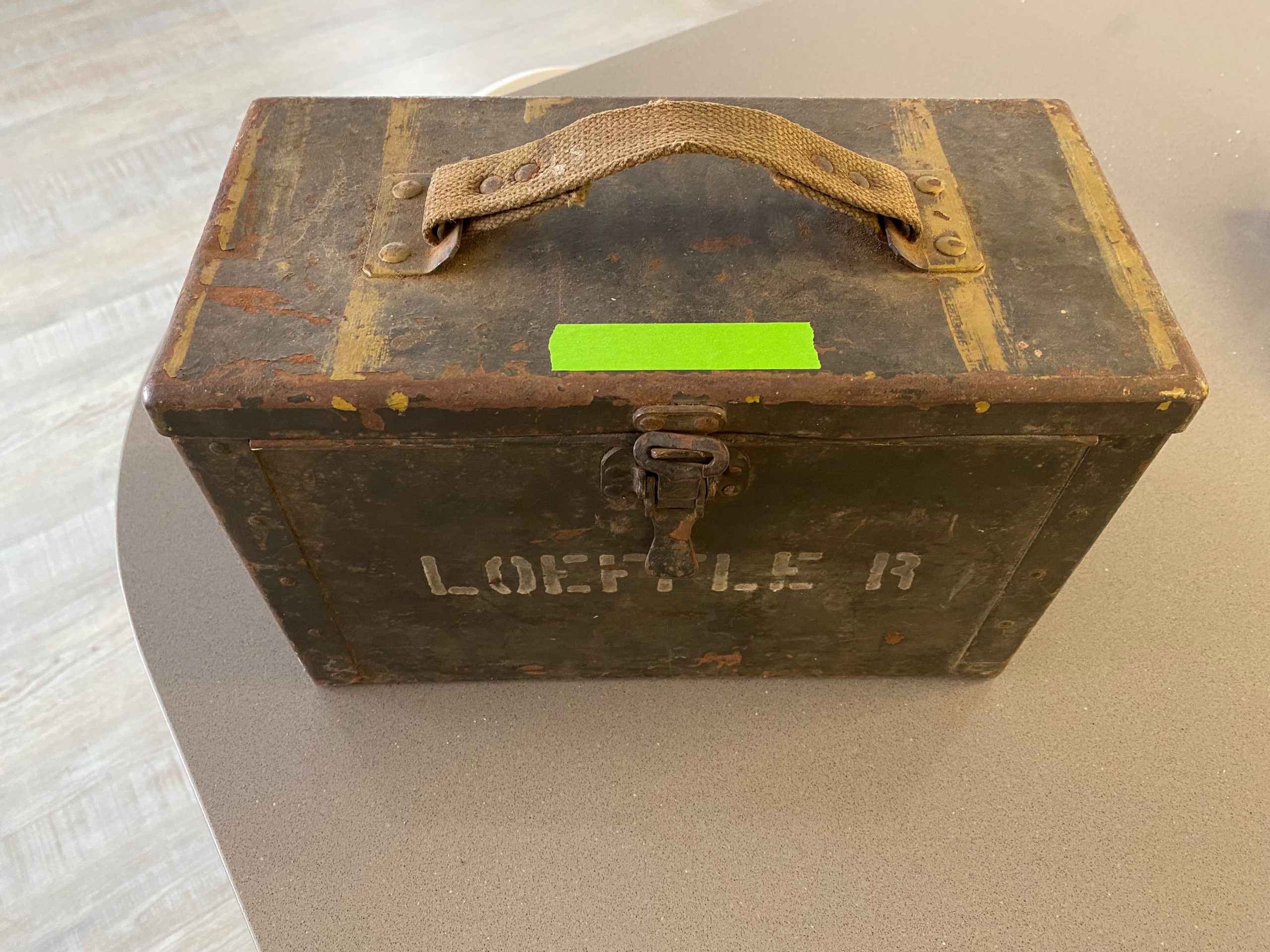
    Sometimes, we get stuck in the avoidance cycle like a washing machine stuck in the spin cycle. I know I attempted to side step my grief by putting it all in the ammo box. It wasn’t until my grief sounded the alarm and threatened to explode that I paid attention. The compartmentalization of my pain over the loss of my daughter responded with that alarming siren. My alarm showed up for me as a loss of interest in my life and well-being.

    Yet, I wasn’t naming it as grief and I was suffering.  I realized that the pain wasn’t serving me and that by reaching out for help I could  begin to understand how this was grief. I could then heed the warnings of my stress induced behaviors and thereby address my grief. I didn’t want to ruin what Nancy and I had built and committed to and work so hard at. We ech grieved differently and I had to find my own way.

    That is when I began my own inner work and explored Men’s Group work and eventually the Grief Recovery Method that I use in my grief service and support work. Being willing to understand that my heart was broken and that I was having difficulty doing this work on my own opened me to the healing that I now offer to others. More from the Ammo Box in future writings.

    [/fusion_text][/fusion_builder_column][/fusion_builder_row][/fusion_builder_container]

  • Dan’s Thoughts on Holiday Grief

    Holiday’s can be really hard when you have lost a family member or had a difficult time this past year. Nancy and I have been talking about doing a series of conversations on grief. While I am new to doing videos, future postings will be a little less stiff as I attempt to improve my delivery and messaging.

    We do this work because our lives were turned upside down and we want to help others avoid some mistakes we made.

  • Men’s Health & Healing – my tale

    This past August I had a Radical Prostatectomy

    My journey through this life event has given me a new appreciation for my health and the support I have in partnership with my wife, Nancy. We recently celebrated 51 years together and 45 years as man & wife. Had I not had the ability to share this event with her and gain the benefit of sharing the burden of my grief, I would not be recovering at the same rate or with the same success.

    The impact of this surgery has had an impact on my state of mind and given me much to think about. Prostate cancer will affect the lives of the majority of men as they age. Health professionals recommend that after the age of 40 you should be screened for your PSA level. It is a simple blood test that gives an indication of whether cancer is present in your prostate. Normal levels are indicated by anything less than one with the lower number the better. My level was 5.5 enough for my physician to recommend that I see a urologist. After a biopsy it was determined that I go through the procedure. I was lucky, I never had my PSA checked. I had neglected routine exams, and regret that I took my health for granted. Fortunately, the result of the surgery indicates that it was a success and that nothing had spread.

    Coming to terms with and recovery from the loss of health is possible. Your attitude and mental equilibrium depends on having support and access to the tools needed for recovery. These tools are not always available because they are not something we normally discuss. Yet, we will all experience the loss of our physical powers over time. That is something that I am recognizing in myself and that I am working on.

    As a grief support advocate and a grief recovery specialist, I help men facing crisis and attempting to overcome their grief. It is not an easy task to handle and most men are not equipped when grief enters their life. This is especially true when you realize that your life has changed in such a profound way.

    Prostate cancer will affect the lives of the majority of men as they age.

    If you would like to talk about where you are at in your recovery, I would be more than happy to share my story and listen with an open healed heart to yours. Schedule a date here or contact me at [email protected]

  • Self-Guided Grief Journey

    Self-Guided Grief Journey

    I’ve created a Self-Guided Grief journey based upon the lessons I have learned along the way on my now grief journey.


    It is a compilation of 25 videos that you can watch at your own pace combined with work sheets and resources to help you along the way.


    Here is the first video to give you an overview of the course.

    Here is a link to register for the course.

    https://members.beingwithgrief.com/register/being-with-grief/

    Let me know if you have any questions!

  • The Sound of Emotion

    Being with Grief has an on-going project called Gift Circle. The idea is that we all have gifts and that we find meaning by sharing these gifts with others. The work that I have been called to do and offer here is based on this idea.

    I grew up during the 60 & 70’s during the height of what is now called Classic Rock.

    The influence of music and sound in our lives cannot be denied. So much of our culture is wrapped up in the sounds bytes of our generation. Today, as I watch my grand daughter begin to sound out words, I have been thinking a lot about her small first words and sounds. It makes me think about interjections. You may not recognize that word but you are sure to recognize what they are. Specifically the words that come to mind are “OH”, “AH”, “EH” and “UH”. 

    So much emotion can be contained in these simple sounds. In fact, many of these simple sounds have multiple meanings. Take for example “OH”. How many times have you used this sound and in what variety of ways? OH can express passion, surprise and even disappointment depending on the emotion you are experiencing.

    I would like to extend an invitation to you to explore these simple words as a way to unlock and re-program ourselves to be more in touch with the emotion that they convey in a 30 minute “ZOOM” call. In my work, I have found that many of us are constricted in expressing our emotion due to the way we were raised. The stereotypical processing of “Be strong – Be silent and Do not show your emotion” had a profound affect on how we approach life and relationships. Being in touch with how these feeling words are used can begin the process of exploring the many emotions that we have available.

    I was either, sad, mad, glad, fearful or shamed.

    In the personal work that I have done to unlock my own limited emotional response, I realized that I had access to 5 basic emotions. I was either, sad, mad, glad, fearful or shamed. Living in this restricted emotional state did not allow me to fully appreciate and connect with my partner, my family or friends. Now after 45 years of marriage, I’d like to share some of the key ideas that kept us connected.

    Being able to express emotion in a healthy way is important to any relationship. I was made aware of how I was not in touch with some of the more complex emotions when our daughter, Leah died. My wife, Nancy has written that the death of our daughter was not only devastating to us but that Leah’s death exposed the cracks in our relationship that needed work. If you are emotionally bound and unable to provide empathy and compassion then being there for each other is simply impossible.

    There are those who would argue that being able to express emotion is not needed.

    Belief that showing emotions somehow weakens and makes you vulnerable is a limited mindset. My story demonstrates that vulnerability can make a relationships stronger. Healthy relationships and intimacy depend on the expression of emotion. My invitation to understand how emotions are conveyed in simple words demonstrate the power of sound. Being able to express even simple emotion is difficult for some. This offering is geared with this in mind by starting simple and exploring sound. I put together a program using the interjections above to express your unexpressed emotions through breath work and sound. If you are interested and would like to learn more reach out on the contact page to let me know.   

  • Early Grief

    [fusion_builder_container type=”flex” hundred_percent=”no” equal_height_columns=”no” menu_anchor=”” hide_on_mobile=”small-visibility,medium-visibility,large-visibility” class=”” id=”” background_color=”” background_image=”” background_position=”center center” background_repeat=”no-repeat” fade=”no” background_parallax=”none” parallax_speed=”0.3″ video_mp4=”” video_webm=”” video_ogv=”” video_url=”” video_aspect_ratio=”16:9″ video_loop=”yes” video_mute=”yes” overlay_color=”” video_preview_image=”” border_color=”” border_style=”solid” padding_top=”” padding_bottom=”” padding_left=”” padding_right=””][fusion_builder_row][fusion_builder_column type=”1_1″ layout=”1_1″ background_position=”left top” background_color=”” border_color=”” border_style=”solid” border_position=”all” spacing=”yes” background_image=”” background_repeat=”no-repeat” padding_top=”” padding_right=”” padding_bottom=”” padding_left=”” margin_top=”0px” margin_bottom=”0px” class=”” id=”” animation_type=”” animation_speed=”0.3″ animation_direction=”left” hide_on_mobile=”small-visibility,medium-visibility,large-visibility” center_content=”no” last=”true” min_height=”” hover_type=”none” link=”” border_sizes_top=”” border_sizes_bottom=”” border_sizes_left=”” border_sizes_right=”” first=”true”][fusion_text]

    In talking about early grief, I consider it as two separate categories. The first can be called a “life-defining” grief, in my case, the grief I felt soon after our daughter, Leah died. The second is the grief you accumulate early in your life.

    For me, this early life grief was a series of incidents that I dug up during my sessions with the grief recovery method or (GRM). Part of the GRM process is to look back at your life to recall all of the moments when a loss occurred. For example, my little league baseball career was not the brightest spot in my childhood. I believe that on my team, I had the most walks of any of my team mates. Not a single hit in two consecutive seasons of play between years 7 and 8.

    That was my baseball story, until the championship game of my second year. With one out, at the top of the 9th inning, I got up to bat. I was nervous, and closing my eyes, I swung at and hit my first fair ball. I got a single. I was elated! It might make the difference on how the season ended. However, the next 2 batters couldn’t connect, the game ended. Championship lost!

    My team didn’t go to Dog and Suds for the celebratory ice cream treat.

    Seems like an insignificant loss, however, when you are 8, it was crushing. It wasn’t  until I looked back at this seemly small loss that I realized I had never let go of the feelings that went along with not having my contribution count towards the success of the team. It didn’t affect the outcome of my life and certainly wasn’t a life-defining loss. Yet, it factored into how I had accumulated an unnecessary burden.

    The story of the death of a pet is a similar story of loss. A loss associated with the death of a beloved pet teaches you a life lesson. It doesn’t hurt any less and as a child it was traumatic. I was not taught how to complete the feelings and say a proper goodbye  and so the emotions lingered. Whether it  is a pet gold fish, a turtle a beloved dog or cat loss is hard for a kid. Parents have a teaching opportunity but often deflect and minimize the loss because they don’t want to see their child suffer.

    How many losses are you aware of that you still carry?

    The early grief associated with Leah’s death was entirely different. The impact of the loss affected every part of me physical, mentally and spiritually. I have spoken about the disconnect I felt and the numbness that came once I felt that I had been unmoored from anything that resembled my past. Nancy and I talk of the uncharted territory of grief and it is a very strange land indeed. Nothing is familiar and the weight of the sadness and the pain of the loss was too much to bear at times. I had to retreat to a place that gave me some relief. I had a hard time concentrating and decisions were difficult. I had lost a daughter and with it nothing seemed familiar.

    I didn’t feel comfortable in my body. Everything hurt. Spiritually, I felt disconnected from anything resembling what I grew up believing. How could God take my daughter?  I felt abandoned. Even our Church community shocked us. There was initial sympathy and support from a few friends, but when we attended church there was a barrier because the congregation as a whole didn’t have the words or the skill to bridge the chasm that separated us from what was normal and comfortable. We were an anomaly.  The feeling of being alienated because no one knew how to respond to a couple who had lost a daughter felt surreal. 

    Be mindful if and when there was grief associated with any loss.

    [/fusion_text][/fusion_builder_column][/fusion_builder_row][/fusion_builder_container]

  • Grief Work

    Grief Work

    [fusion_builder_container type=”flex” hundred_percent=”no” equal_height_columns=”no” menu_anchor=”” hide_on_mobile=”small-visibility,medium-visibility,large-visibility” class=”” id=”” background_color=”” background_image=”” background_position=”center center” background_repeat=”no-repeat” fade=”no” background_parallax=”none” parallax_speed=”0.3″ video_mp4=”” video_webm=”” video_ogv=”” video_url=”” video_aspect_ratio=”16:9″ video_loop=”yes” video_mute=”yes” overlay_color=”” video_preview_image=”” border_color=”” border_style=”solid” padding_top=”” padding_bottom=”” padding_left=”” padding_right=””][fusion_builder_row][fusion_builder_column type=”1_1″ layout=”1_1″ background_position=”left top” background_color=”” border_color=”” border_style=”solid” border_position=”all” spacing=”yes” background_image=”” background_repeat=”no-repeat” padding_top=”” padding_right=”” padding_bottom=”” padding_left=”” margin_top=”0px” margin_bottom=”0px” class=”” id=”” animation_type=”” animation_speed=”0.3″ animation_direction=”left” hide_on_mobile=”small-visibility,medium-visibility,large-visibility” center_content=”no” last=”true” min_height=”” hover_type=”none” link=”” border_sizes_top=”” border_sizes_bottom=”” border_sizes_left=”” border_sizes_right=”” first=”true”][fusion_text]

    I have spent a lot of time thinking about and working with grief including the pain, doubt, fear and shame that accompanies this human condition. While I have come to understand that grief is a normal and natural condition, I now also understand that grief as an emotion is different from living with the feeling of grief.

    Grief is complicated, wrapped in misunderstanding and worthy of a closer look.

    As an Advanced Grief Recovery Specialist, we are shown that grief occurs whenever a familiar pattern of behavior changes. What does that mean? This idea may or may not be familiar to you; I struggled to understand the concept until I thought of the following examples from my life:

    The loss of a relationship is an obvious example of a pattern that changes. Whether it is a first love or a love that has lasted a lifetime, when a relationship ends it can be devastating. When there isn’t an answer to you calling their name, the pattern has changed and grief enters. Many examples of this type of loss is common and I’ll re-visit some of them in later writings.

    Loss of a job is another example that most people will understand. When you have gotten into the rhythm of a job and the job is no longer available, you can experience grief. Whether it is because the job is over or there was a layoff, when you no longer have to punch a clock or show up as scheduled it can affect your sense of worth and put your life and finances upside down. COVID-19 caused us to miss the relationships that develop in a work environment. This is another example of feeling grief associated with virtual work and a significant pattern change.

    Loss of a pet, whether it is missing the daily walk or the couch cuddles is a loss of pattern that can leave you raw. Especially, the unconditional love they give us when that love is no longer there. Pets offer us many examples of living in the moment whether it is scratching at the door for the urgent nature call or the plaintive meows when it is dinner and the bowl is empty.

    These living in the moment patterns impact our routines.

    If you are like me, I love my morning routine of a morning cup of coffee and a silent prayer at the start of the day. Routines offer consistency and are comforting. You know what to expect. When the unexpected happens and the pattern changes we can be thrown into chaos and struggle with those doubts, fears and shame.

    You can bet that at some point in your life, you will be faced with a major change in your routine.

    Whether it is one of the situations that I mention above or perhaps one that came to you as you read this post. What we do when our patterns change, how we adjust, what we shed, what we keep and how we pick ourselves up will be covered as I delve into tackling the challenging subject of men’s grief and begin to peal back the layers on my story. 

    [/fusion_text][/fusion_builder_column][/fusion_builder_row][/fusion_builder_container]

  • A Dream About Leah

    I had a dream about Leah last night. It’s been a while since that has happened. In the dream, I knew at some level that she was no longer with me in physical form, so it gave me great comfort to be with her in the dream. She was slightly older than when she left and was wearing clothes that I didn’t recognize. Anyone who knew Leah knows that she was very fashion conscious and wore her clothes like no one else could. Our communication was not by words, but rather, by thoughts. I asked her who was buying her clothes now that I wasn’t. She pointed to herself. I asked her if she’d like to go shopping with me, if she needed new clothes for school. She smiled and said yes. I sat from afar and watched her for a while. There was a sense that she was reaching out through the dimensions to me and I savored the time.

    When I woke up, I sat on the porch with my coffee thinking about the dream. This one had the quality of a connection with her. She connected with a known shared activity, clothes and shopping. Her presence had the characteristic of an alternate reality, things not quite the way they were when she was here physically. I know this is the very description of dreams, and yet, there was a knowingness that we were both visiting a place where we could relate at least in that moment. Plus, she gave me a smile, her smile, one that lit up her whole face. My memory of that smile does not do it justice, I could not have imagined her smile in the way I experienced it in our dream.

    As I continued to be with the dream, I allowed myself to miss her, and I wondered what my life would have been like if she was still here, if she didn’t die 16+ years ago. If, instead of mourning her loss, I would have been celebrating her life all these years. I wondered where she would be living, where we would be living, and how the four of us would be different then we are today.

    I was wistful. I missed her. I allowed myself to feel the longing in my heart for my daughter, for what might have been but she’s still not here. That’s the part my head can’t wrap itself around; she’s still not here. No amount of wishing her back will change that.

    I look at my life now, and I know that I am living the life I was meant to live, honoring the message I received right after she died, that said, “Losing her is too high a price to pay to not live the life you were meant to live.” Getting here was not easy, staying here is sometimes still not easy, and yet, here I am and there she is.

    I’m grateful for the times we can connect in that liminal space that l don’t fully understand. It’s another part of the unknown that unfolds as I travel the spiral of my grief initiation. Bringing all of the journey to my heart, to hold, to allow, to be with whatever shows up along the way. It’s in my heart that the alchemy happens, the place where I receive blessings and grace that allow me to continue to live on the other side of the veil from my daughter; blessings and grace that give me the courage to bring her light into the world through my story. I continue to bow the to the mystery.